
Welcome!
Stuff we like
FYFluiddynamics- Salt and DunesPhotographer Barbara Brown captured these striking aerial views in Namibia. Coastal dunes and saltworks feature in the photos from Walvis Bay, where wind, waves, evaporation, and humankind have shaped the landscape. The colorful and dendritic dune images come from Sossusvlei, where the ephemeral Tsauchab River ends in the Namib Desert. Recent flooding left its mark […]

Photographer Barbara Brown captured these striking aerial views in Namibia. Coastal dunes and saltworks feature in the photos from Walvis Bay, where wind, waves, evaporation, and humankind have shaped the landscape. The colorful and dendritic dune images come from Sossusvlei, where the ephemeral Tsauchab River ends in the Namib Desert. Recent flooding left its mark on the dry landscape. (Image credit: B. Brown/IAPOTY; via Colossal)
7 August 07 2026, 15:00Arthttps://fyfluiddynamics.com/?p=31824Comments... - How Corals StirReef-building coral polyps constantly stir the water around them with dense carpets of microscopic hair-like cilia. The beating of the cilia helps polyps feed while also pushing away sediment and debris. Their stirring increases nutrient and gas exchange with seawater, too. A new study combines experimental measurements with a simple mathematical model to recreate the […]
Reef-building coral polyps constantly stir the water around them with dense carpets of microscopic hair-like cilia. The beating of the cilia helps polyps feed while also pushing away sediment and debris. Their stirring increases nutrient and gas exchange with seawater, too. A new study combines experimental measurements with a simple mathematical model to recreate the three-dimensional flows corals make. The model’s efficiency means it should be useful for future studies of how corals and other cilia-covered systems interact with bacteria or other active particles. (Image and research credit: S. Selvan et al.; via APS)
 6 August 06 2026, 15:00Researchhttps://fyfluiddynamics.com/?p=30932
 - The Subtleties of Pipe FlowIf you put a thumb over your hose’s outlet, you get a faster jet, but how does that affect the flow rate? That’s the question Grady starts from in this Practical Engineering video exploring pipe flow physics. From continuity and control volumes to practical losses, he touches on both the theory and practice behind this […]
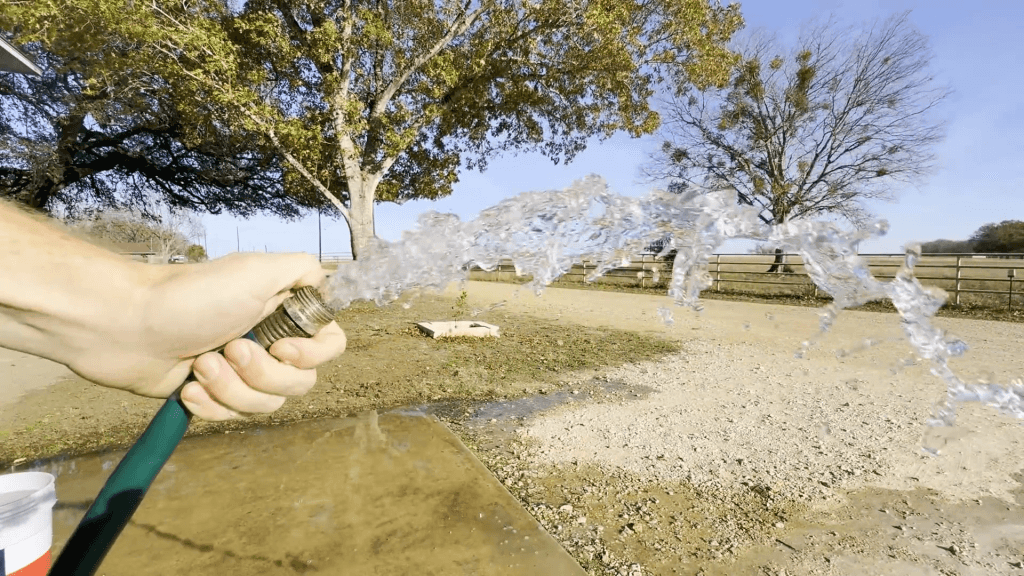
If you put a thumb over your hose’s outlet, you get a faster jet, but how does that affect the flow rate? That’s the question Grady starts from in this Practical Engineering video exploring pipe flow physics. From continuity and control volumes to practical losses, he touches on both the theory and practice behind this all-important aspect of engineering. Pipe flow is often where engineering students begin their studies of fluids, but that doesn’t mean it’s easy! (Video and image credit: Practical Engineering)
5 August 05 2026, 15:00Phenomenahttps://fyfluiddynamics.com/?p=31337 - Screening for Sleep ApneaSnoring and sleep apnea–a condition where aeroelastic flutter obstructs the airway and stops breathing during sleep–often go hand-in-hand. But diagnosing sleep apnea involves an expensive and time-consuming screening in which the patient has to sleep while monitored by various sensors. To make the process easier, researchers are developing a screening method based only on audio […]
Snoring and sleep apnea–a condition where aeroelastic flutter obstructs the airway and stops breathing during sleep–often go hand-in-hand. But diagnosing sleep apnea involves an expensive and time-consuming screening in which the patient has to sleep while monitored by various sensors. To make the process easier, researchers are developing a screening method based only on audio recording.
They started with a pre-trained audio model designed for speech recognition and stripped back computationally-expensive layers that weren’t relevant to snoring. Then they trained the new model using labeled audio data taken from standard clinical testing for sleep apnea. That means the model was told which audio recordings corresponded to “normal” snoring and which showed signs of sleep apnea. From there, the model was able to correctly identify apnea-related audio from fresh recordings just under 74% of the time. While that accuracy isn’t high enough to use the tool for diagnosis, it could help patients pre-screen for sleep apnea at home to decide whether the more invasive testing is warranted. (Image credit: L. Cline; research credit: H. Li et al.; via Physics World)
4 August 04 2026, 15:00Researchhttps://fyfluiddynamics.com/?p=31290
Join us
- This is the default HTML.
- You can replace it with your own.
- Include your own code without the HTML, Head, or Body tags.